Tacoma, T100 & 4Runner
- Ensure battery is fully charged. Release fuel pressure. See FUEL PRESSURE RELEASE under FUEL SYSTEM. Disconnect negative battery cable.
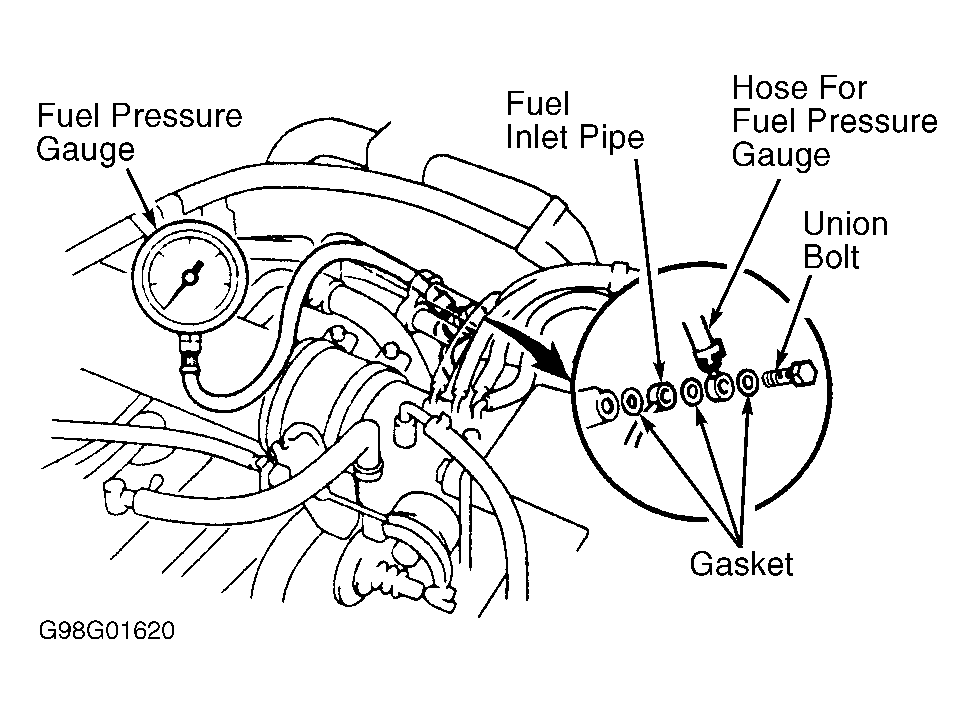
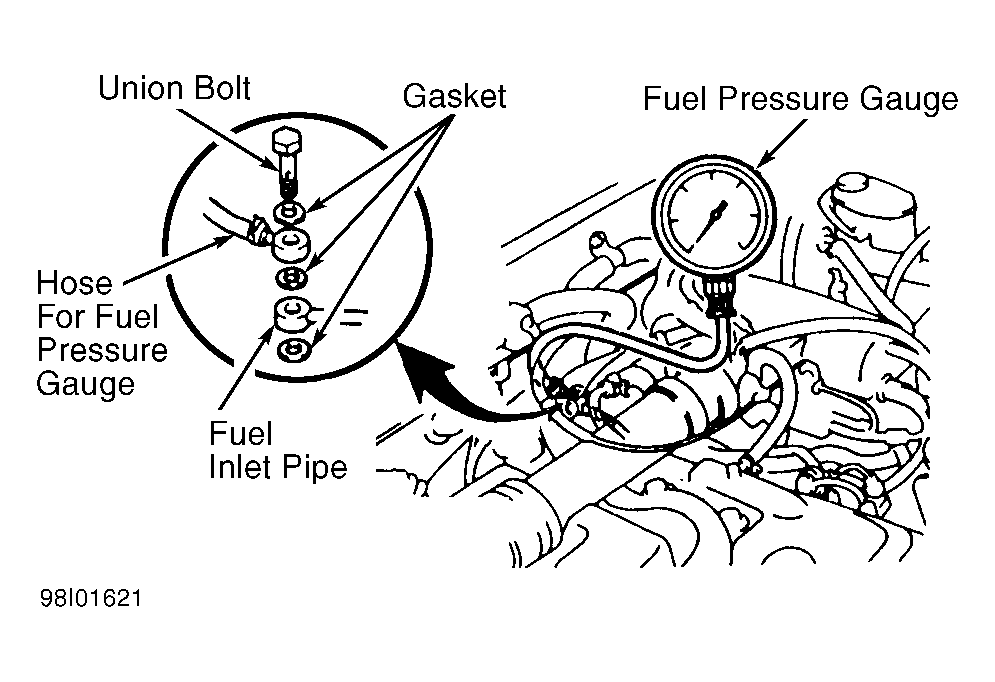
- Note location for fuel pressure gauge installation on fuel rail. See Fig 1-22. Fuel pressure gauge is installed at firewall end of fuel rail, between fuel rail and fuel inlet pipe. Remove union bolt with gaskets, and disconnect fuel inlet pipe from fuel rail.
- Install fuel pressure gauge from Fuel Pressure Gauge Set (SST 09268-45012) with gaskets, fuel inlet pipe and union bolt on fuel rail. See Fig 1-22. Tighten union bolt to 21 ft. lbs. (29 N.m).
- Reconnect negative battery cable. Install scan tool on data link connector No. 3. See Figure-8. Turn ignition on. DO NOT start engine.
- Turn scan tool on. Select ACTIVE TEST MODE on scan tool. Using scan tool manufacturer's instructions, activate fuel pump and note fuel pressure. Fuel pressure should be 38-44 psi (2.7-3.1 kg/cm2
).
NOTE:
Fuel pump may also be activated by connecting battery voltage to specified terminals on fuel pump. See Figure-16.
- If fuel pressure is within specification, go to next step. If fuel pressure exceeds specification, replace fuel pressure regulator mounted on fuel rail. See REMOVE/INSTALL/OVERHAUL
article. If fuel pressure is less than specified, check for leaking fuel hoses or connections, restricted fuel filter, defective fuel pump or defective fuel pressure regulator.
- Turn ignition off. Remove scan tool from data link connector No. 3. Start engine and allow engine to idle. Disconnect and plug vacuum line at fuel pressure regulator. Note fuel pressure. Fuel pressure should be 38-44 psi (2.7-3.1 kg/cm2
).
- Reconnect vacuum hose on fuel pressure regulator and note fuel pressure with engine idling. Fuel pressure should be 31-37 psi (2.2-2.6 kg/cm2
). If fuel pressure is within specification, go to next step. If fuel pressure is not within specification, check for defective vacuum hose or fuel pressure regulator.
- Shut engine off and note fuel pressure. Fuel pressure should remain at least 21 psi (1.5 kg/cm2
) for a minimum of 5 minutes. If fuel pressure is within specification and holds as specified, go to next step. If fuel pressure is not within specification or does not hold as specified, check for defective fuel pump, fuel injector or fuel pressure regulator.
- Release fuel pressure. Disconnect negative battery cable. Remove fuel pressure gauge. Using NEW gaskets, reinstall fuel inlet pipe on fuel rail. Tighten union bolt to 21 ft. lbs. (29 N.m).
- Install negative battery cable. Check for fuel leaks by using scan tool to energize fuel pump.
 Courtesy of © TOYOTA, LICENSE AGREEMENT TMS1002
 Courtesy of © TOYOTA, LICENSE AGREEMENT TMS1002