Fault Isolation Procedure
- Checking the relay power supply:
- Remove component: Main relay for the engine management system.
- Turn the ignition switch to the ON position.
- Connect Test Lamp (86 1 857) to pin 4 (86) of the relay holder and a good grounding point.
- Jiggle the leads and in-line connectors at several places and in different directions to reveal intermittent breaks and short circuits in the wiring harness. Observe the multimeter, test lamp or diagnostic tool while doing this.
If the test lamp illuminates, go to step 3, otherwise go to next step.
- Rectifying the lead: The lead from +30 to pin 4 (86) of the relay holder is faulty. Rectify the fault and go to step 6.
- Checking the relay's control module output:
- Connect Test Lamp (86 1 857) to pins 4 (86) and 5 (85) of the relay holder.
- Jiggle the leads and in-line connectors at several places and in different directions to reveal intermittent breaks and short circuits in the wiring harness. Observe the multimeter, test lamp or diagnostic tool while doing this.
If the test lamp illuminates, go to step 5, otherwise go to next step.
- Rectifying the lead: The lead from pin 26 of the control module to pin 5 (85) of the relay holder is faulty. Rectify the fault and go to step 6.
- Changing components: Change the Main relay for the engine management system. When finished, go to next step.
- Final check:
- Turn the ignition switch to the ON position.
- Clear DTCs (ECM).
- Turn the ignition switch to the OFF position.
- Wait for 10 seconds.
- Reset the limp-home mechanism.
- Clear the DTCs in all systems.
- Carry out a drive cycle: Drive the car at varying engine loads and engine RPM for 5 minutes.
- Evaluate the drive cycle: Check that the DTC has not recurred.
If the trouble code has recurred, the ECM is probably at fault and will need replacement. Replace with known-good ECM and retest. If no DTCs are present, then the steps taken to rectify the fault were correct.
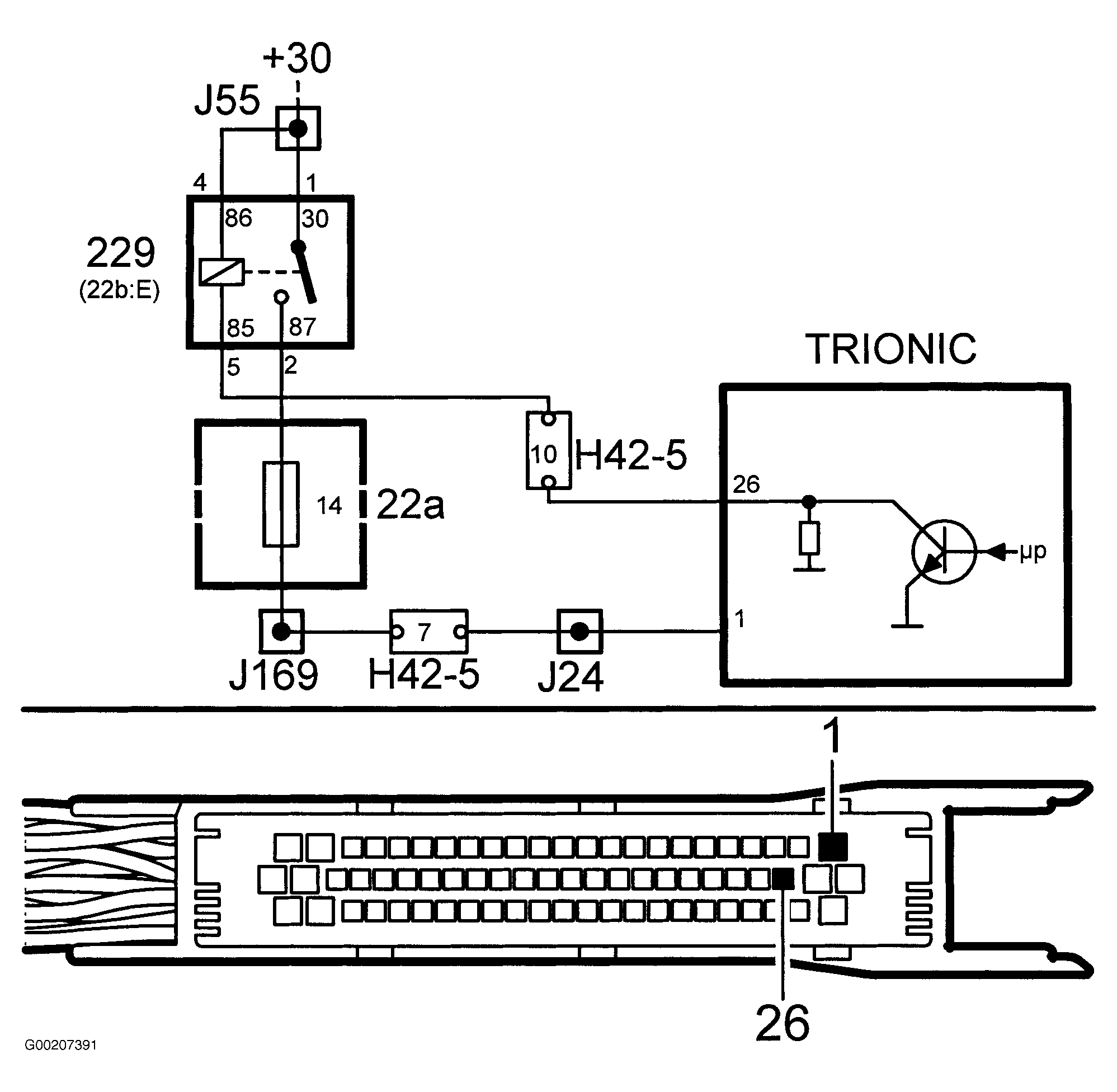 Courtesy of SAAB-SCANIA OF AMERICA, INC.