Fault Isolation Procedure
- Checking the sensor's power supply:
- Turn the ignition switch to the ON position.
- Unplug the connector: Pressure sensor, EVAP (585).
- Take a voltage reading: 585:1 and B-.
- Jiggle the leads and in-line connectors at several places and in different directions to reveal intermittent breaks and short circuits in the wiring harness. Observe the multimeter, test lamp or diagnostic tool while doing this.
If the reading shows 4.9-5.1 volts, go to step 3, otherwise go to next step.
- Rectifying the lead: The lead from crimped connection J21 to pin 1 of the female connector is faulty. Rectify the fault and go to step 9.
- Checking the sensor's grounding:
- Take a voltage reading: 585:1 and 585:2.
- Jiggle the leads and in-line connectors at several places and in different directions to reveal intermittent breaks and short circuits in the wiring harness. Observe the multimeter, test lamp or diagnostic tool while doing this.
If the reading shows 4.9-5.1 volts, go to step 5, otherwise go to next step.
- Rectifying the lead: The lead from crimped connection J22 to pin 2 of the female connector is faulty. Rectify the fault and go to step 9.
- Checking the control module's sensor input:
- Contact ECM.
- Read value: Fuel Tank Pressure.
- Jiggle the leads and in-line connectors at several places and in different directions to reveal intermittent breaks and short circuits in the wiring harness. Observe the multimeter, test lamp or diagnostic tool while doing this.
If the reading shows 2.5 kPa, go to step 7, otherwise go to next step.
- Rectifying the lead: The lead from pin 3 of the female connector to pin 59 of the control module is faulty. Rectify the fault and go to step 9.
- Checking the control module's sensor input (continued):
- Connect a jumper lead between pins 2 and 3 of the female connector.
- Read value: Fuel Tank Pressure.
- Jiggle the leads and in-line connectors at several places and in different directions to reveal intermittent breaks and short circuits in the wiring harness. Observe the multimeter, test lamp or diagnostic tool while doing this.
If the reading shows -2.5 kPa, go to next step, otherwise go to step 6.
- Changing components: Change the EVAP pressure sensor. When finished, go to next step.
- Final check:
- Clear the DTCs in all systems.
- Carry out a drive cycle: Drive the car at varying engine loads and engine RPM for 5 minutes.
- Evaluate the drive cycle: Check that the DTC has not recurred.
If the trouble code has recurred, the ECM is probably at fault and will need replacement. Replace with known-good ECM and retest. if no DTCs are present, then the steps taken to rectify the fault were correct.
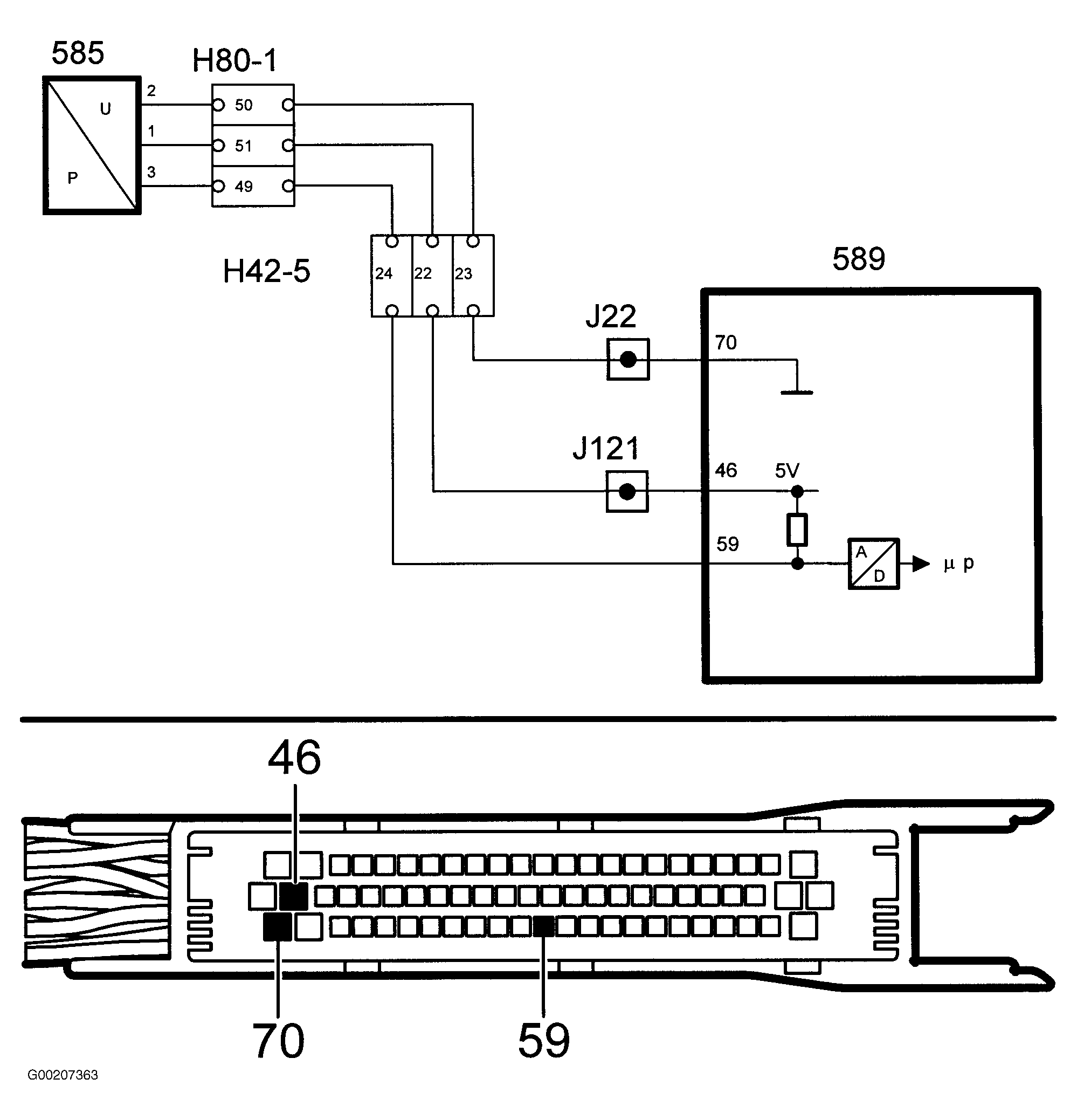 Courtesy of SAAB-SCANIA OF AMERICA, INC.
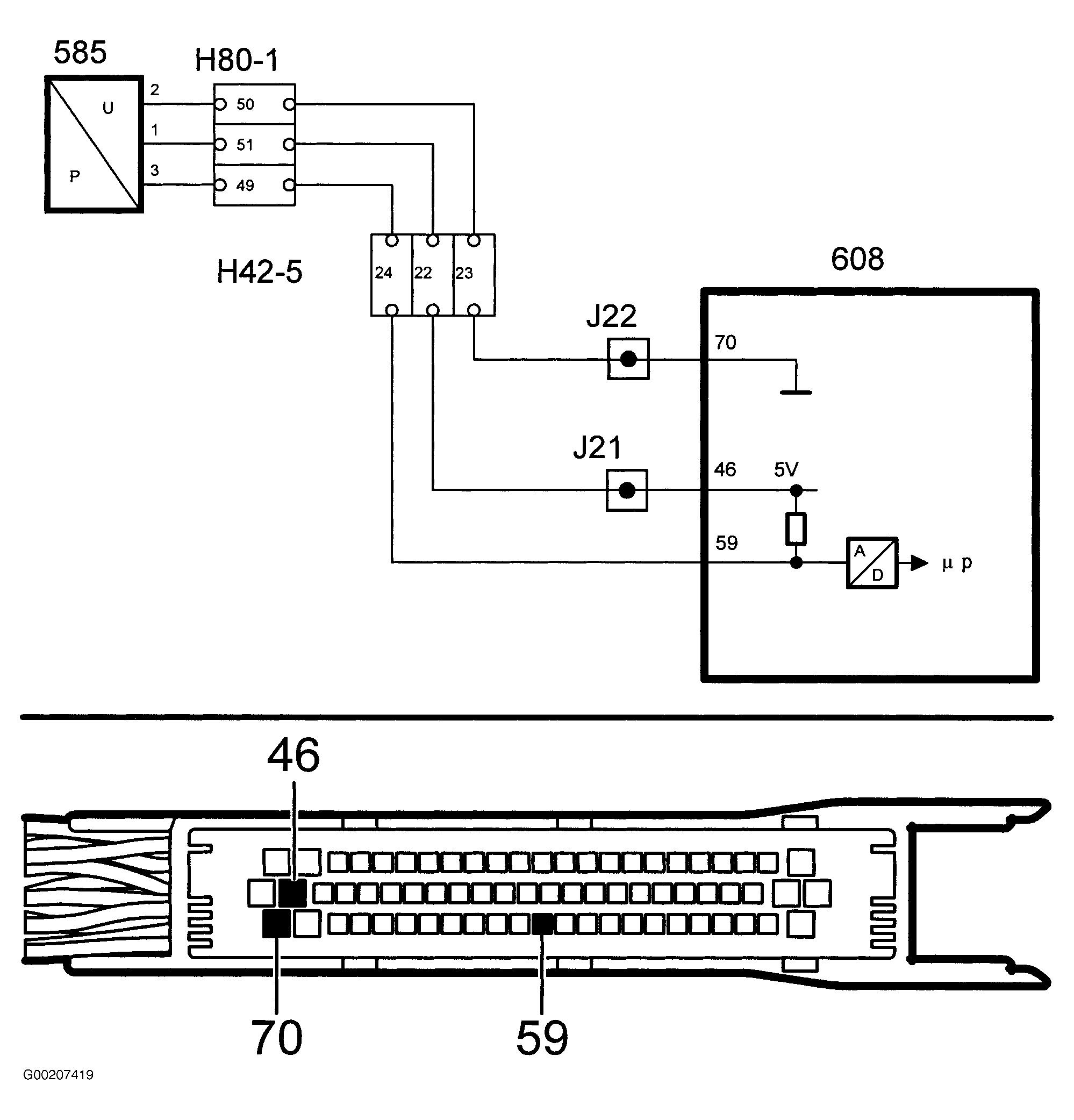 Courtesy of SAAB-SCANIA OF AMERICA, INC.